
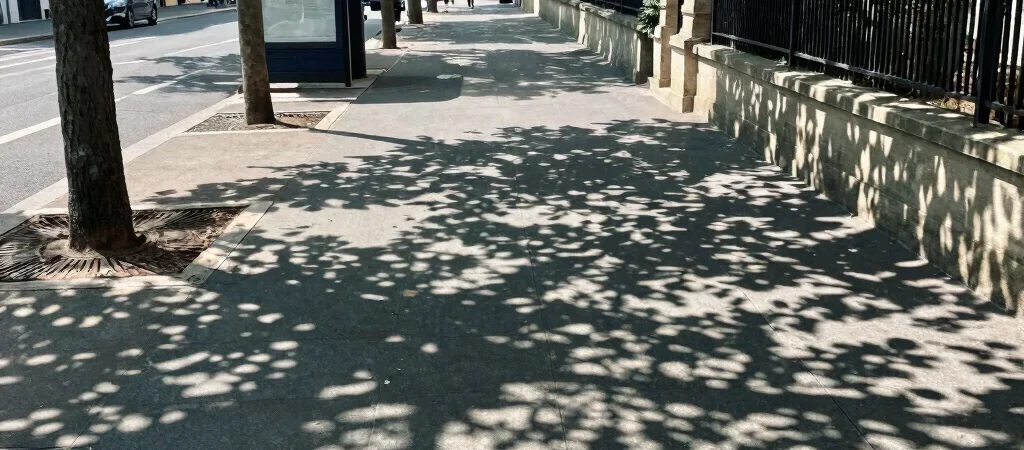
On a hot afternoon, the difference between a shaded route and a sunlit one can shape how far someone is willing to walk. Planting trees is an important part of urban cooling, but a row of saplings does not immediately create a usable canopy. The question for a city is not simply where trees can be planted, but where shade will matter and what will allow it to last.
Begin with the walking route
Look at the places people need to reach on foot: transit stops, schools, shops, public services, and connections between neighborhoods. Shade along a daily route can be more useful than a decorative planting that is disconnected from how people move. Mapping sunny stretches at different times of day can help identify where the gap is most noticeable.
Make room below ground
A street tree needs more than an opening in the pavement. Roots share tight underground space with utilities, and young trees need suitable conditions to establish themselves. Designers also have to consider pedestrian access, visibility, maintenance, and how rainwater reaches the planted area.
Pair canopy with water
Where street design allows, permeable surfaces and planting areas can help rain enter the ground instead of sending every drop straight to a drain. Their value depends on local soils, existing networks, and maintenance; a planted strip is not a substitute for understanding how water behaves on that street. A useful proposal explains both the intended benefit and the conditions needed to sustain it.
Measure what residents experience
Plans and renderings can show where planting is proposed, but follow-up should also ask whether routes became more comfortable and whether trees survived and grew. That means paying attention to ordinary details: shade at a bus stop, a clear path for a stroller or wheelchair, and a planting bed that is not used as a shortcut. For residents reviewing a proposal, the strongest question is often where people will actually feel the difference.